Plain-language writing on zero-knowledge architectures, encrypted storage, and what it takes to keep sensitive files actually confidential.
Meta's AI continuously scans Instagram, Facebook and Messenger content. One automated flag can wipe years of photos, DMs and pages overnight. Here is how the system works — and how to keep your real files safe.
A single Google ban can erase Gmail, Drive, Photos, YouTube and Android backups in one click. Learn why it happens, what AI scanning has to do with it, and how to keep your data outside the blast radius.
Permanent Meta bans wipe DMs, photos and shared files. For anyone handling NDA material through social platforms, that is a compliance failure waiting to happen. Here is the safer architecture.
Meta AI is now embedded across Messenger, Instagram and WhatsApp surfaces. What it actually reads, what it stores, and where to put the photos and conversations you do not want training a model.
The Gmail and Drive pipelines combine automated AI scanning with human review queues. Both layers can leak, mis-tag and trigger account loss. Here is the architecture, and the zero-knowledge alternative.
Years of photos and business documents disappear every month behind silent Google, Meta and Apple bans. The fix is architectural: store irreplaceable files outside any system that can lock you out.
Trying to recover a banned Instagram is mostly a lottery. The real question is what to do about the files you stored inside it. Here is a calmer plan, and a safer place for your private content.
Google Photos runs AI classification across every image in your library. For NDA, medical or legal work, that is a compliance and leak risk. Here is the safer pattern.
Plan for the ban that has not happened yet. A short, practical guide to surviving sudden account loss without losing the files that matter.
A buyer's guide to private cloud storage that does not scan your files, does not ban your account on AI flags, and does not collapse your photos and business data on a moderator's bad day.
L'IA de Meta scanne en permanence Instagram, Facebook et Messenger. Un seul flag automatique peut effacer des années de photos, de DMs et de pages. Voici comment ça marche — et comment protéger vos vrais fichiers.
Un seul ban Google peut effacer Gmail, Drive, Photos, YouTube et les sauvegardes Android en un clic. Pourquoi cela arrive, le rôle du scan IA, et comment garder vos données hors de la zone de blast.
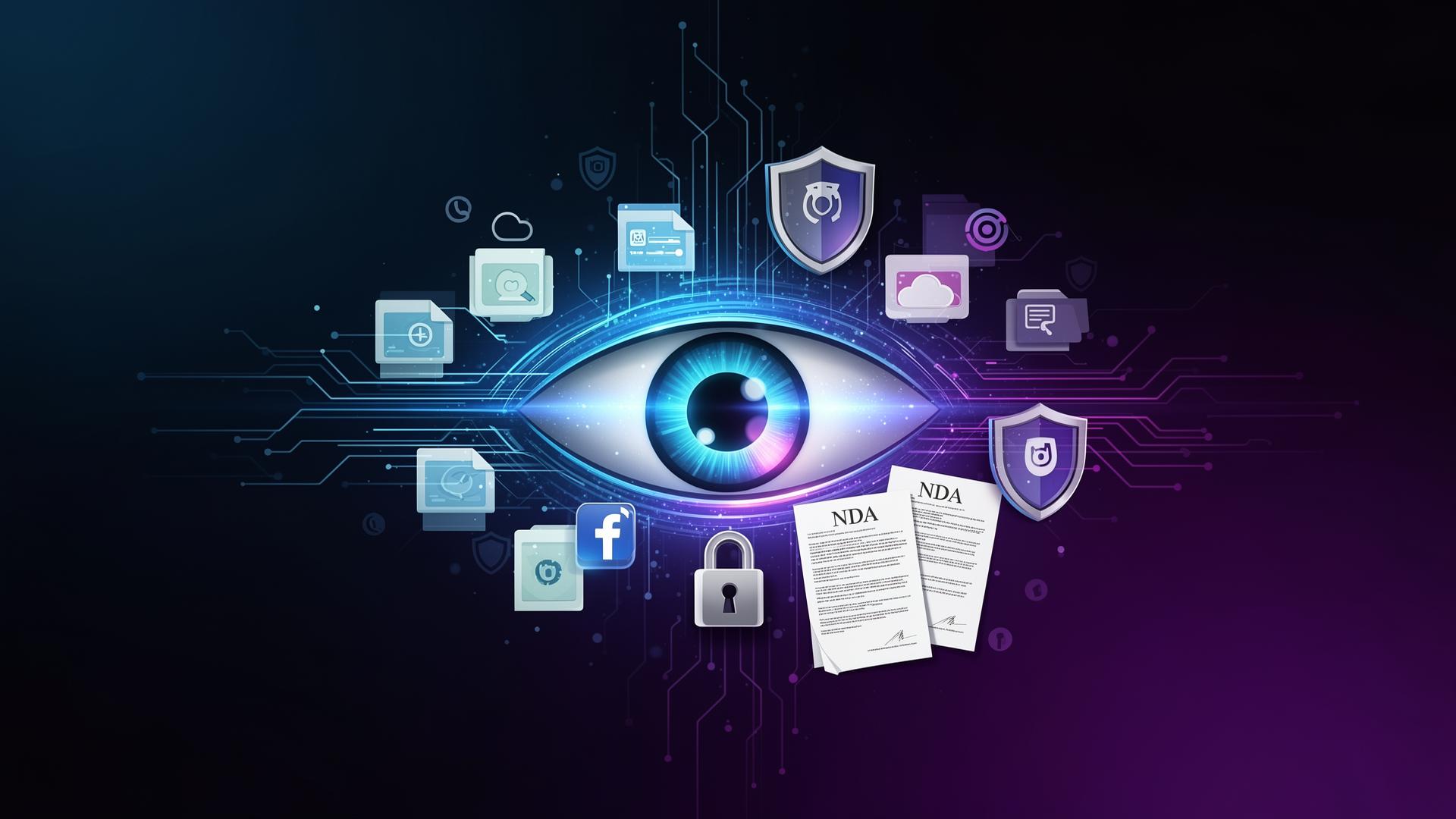
Les bans Meta définitifs effacent DMs, photos et fichiers partagés. Pour quiconque manipule du NDA via une plateforme sociale, c'est une faille de conformité programmée.
Meta AI est désormais intégré à Messenger, Instagram et WhatsApp. Ce qu'il lit réellement, ce qu'il stocke, et où mettre les photos et conversations qui ne doivent pas entraîner un modèle.
Les pipelines Gmail et Drive combinent scan IA et files de révision humaine. Les deux couches peuvent leak, mal tagger et déclencher la perte du compte. Architecture et alternative zero-knowledge.
Des années de photos et de documents pro disparaissent chaque mois derrière des bans silencieux Google, Meta ou Apple. Le fix est architectural : sortir l'irremplaçable de tout système qui peut vous verrouiller.
Récupérer un Instagram banni est largement une loterie. La vraie question : que faire des fichiers stockés dedans. Un plan plus calme et un endroit plus sûr pour votre contenu privé.
Google Photos fait tourner de la classification IA sur chaque image. Pour le NDA, le médical ou le juridique, c'est un risque de conformité et de fuite. Voici le pattern plus sûr.
Planifier le ban qui n'est pas encore arrivé. Un guide court et pratique pour survivre à une perte soudaine de compte sans perdre les fichiers qui comptent.
Guide d'achat d'un cloud privé qui ne scanne pas vos fichiers, ne bannit pas votre compte sur un flag IA, et ne fait pas s'effondrer vos photos et données pro le mauvais jour d'un modérateur.
Zero-knowledge is a precise architectural claim, not a marketing word. Here is what it actually requires — and how to tell when a cloud truly qualifies.
TLS, encryption at rest and SOC 2 reports do not prevent your provider from reading your files. Here is what actually does.
A clear, non-marketing explanation of how a properly encrypted cloud storage service handles your files end-to-end.
Step-by-step: how a file is encrypted on your device before it ever reaches our servers.
Local (client-side) encryption is not a minor implementation detail. It is the architectural choice that determines whether your provider can read your data.
What 'private cloud' actually means in 2026, and how it differs from a traditional consumer cloud.
An NDA is a contractual promise. Encrypted storage is a technical guarantee. You want both.
Identity papers, contracts, medical records, financial documents — what 'secure' should mean for the files that matter most.
Server-side AI features are useful — and they require access to your plaintext. Here is what that actually means for confidentiality.
Unreleased work is leverage. A provider that can read it is a provider that can leak it — by accident or by compulsion.
One suspension can interrupt access to mail, files, photos and login providers tied to the same account. Here is what the risk actually looks like — and how to reduce it.
Lawyers, doctors, designers and founders are moving sensitive work off general-purpose clouds. Here is what is driving the shift.
An NDA binds people. It does not bind their tools. If the cloud holding the file can read it, your contractual promise is partly architectural luck.
A direct answer to a question most users never ask: in a traditional cloud, the provider can technically read your files. Here is exactly why — and what changes with zero-knowledge.
Server-side AI features are powerful, useful, and incompatible with strict confidentiality. Here is what that shift means for sensitive files.
The terms are related, but not interchangeable. Here is a precise, non-marketing explanation of how they differ — and why it matters for cloud storage.
What to look for in a private alternative to a general-purpose cloud — and how DRIVUNO compares.
Provider breaches are not hypothetical. What an attacker actually gets depends almost entirely on whether the provider holds the keys.
Photo libraries are some of the most analysed content on the modern cloud. Here is how to keep family and personal photos out of that pipeline.
A precise, non-sensational answer. What traditional clouds — including Google Drive — can technically do, and why a zero-knowledge vault is structurally different.
Most clouds protect you with policies. DRIVUNO protects you with cryptography. The difference matters more than any badge or certification.
Almost every cloud claims to be 'encrypted'. The architectural question is whether encryption happens before your file leaves your device.
Every cloud claims you own your data. Ownership without control is a slogan. Here is what real control over your files requires.
Privacy controls hidden behind a toggle protect almost no one. Privacy by default is a design discipline — here is what it changes.
NDA projects, client files, internal drafts, financial documents. What it takes to do confidential work on cloud infrastructure without compromise.
You can share files with confidence without giving your provider a copy of the plaintext. Here is how recipient-keyed sharing actually works.
A strong password protects access to your account. It does not protect the data inside. Here is what a complete personal privacy posture actually looks like.
Zero-access is a precise engineering claim — not a slogan. Here is what it requires, how to verify it, and how DRIVUNO implements it.
Google Drive chiffre vos fichiers côté serveur — Google détient les clés. DRIVUNO chiffre sur votre appareil. Comparaison honnête, sans marketing.
Dropbox cifra tus archivos en el servidor — Dropbox tiene las llaves. DRIVUNO cifra en tu dispositivo, antes de subir. Comparación honesta.
OneDrive verschlüsselt serverseitig — Microsoft hält die Schlüssel. DRIVUNO verschlüsselt auf deinem Gerät, vor dem Upload. Ehrlicher Vergleich.
iCloud cifra lato server di default; la modalità Advanced Data Protection è opzionale. DRIVUNO cifra sempre sul tuo dispositivo. Confronto onesto.
WeTransfer transita e armazena com cifragem gerida pelo provedor. DRIVUNO cifra no seu dispositivo antes de qualquer envio.
Slack-bestanden zijn toegankelijk voor de provider en workspace-admins. DRIVUNO versleutelt op jouw apparaat, vóór upload.
Google Drive はサーバー側で暗号化し、Google が鍵を保持します。DRIVUNO はあなたの端末で暗号化します。誠実な比較。
Dropbox 在服务器端加密 — 钥匙由 Dropbox 持有。DRIVUNO 在你的设备上加密。诚实的对比。
OneDrive шифрует файлы на сервере — ключи у Microsoft. DRIVUNO шифрует на вашем устройстве, до загрузки. Честное сравнение.
A side-by-side, honest look at how Google Drive, Dropbox, OneDrive, iCloud, WeTransfer and Slack handle your files — and what DRIVUNO does differently.
Start free with 2 GB. Zero-knowledge encryption from the first upload — no admin override, no AI scanning, no plaintext on the server.