Cloud security7 min read•
Gmail & Google Drive data leak or ban: how human reviewers and AI put your sensitive documents at risk
The Gmail and Drive pipelines combine automated AI scanning with human review queues. Both layers can leak, mis-tag and trigger account loss. Here is the architecture, and the zero-knowledge alternative.
Try it in one click.
Three private surfaces. Same zero-knowledge architecture.
The two layers most users do not see Google does not just scan files for malware. Gmail and Drive both run a continuous pipeline:
- Layer 1: AI classifiers tag every file and message for safety, abuse, copyright and policy categories.
- Layer 2: human reviewers receive AI-flagged content in queues, often with limited context.
Both layers are inside Google's trust boundary. Both layers see your plaintext.
How a "leak" actually happens - A reviewer mis-handles a flagged file. - A misconfigured share link exposes a document to public crawlers. - An AI classifier creates an embedding that survives a subpoena. - A breach affects the indexing or backup tier, where data is decrypted.
You will rarely see "Gmail leaked your file" in a headline. You will see "subset of users affected by configuration error" — and the architecture made that possible.
How a ban turns into a leak risk When an account is suspended, content is preserved for internal review. That is a second copy of your sensitive data, in a different system, accessible to a different set of people. For NDA work, that alone is a problem.
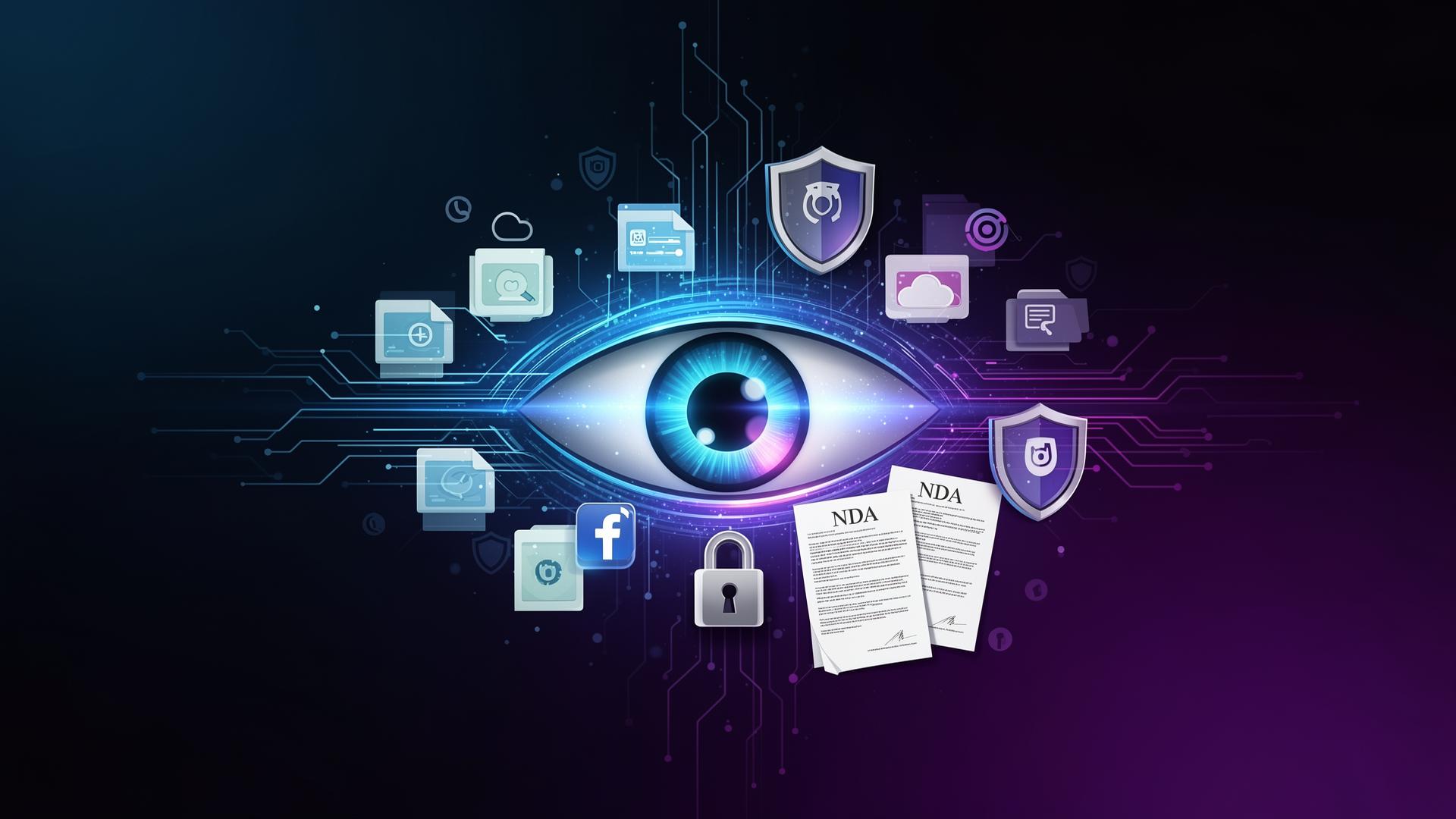
What zero-knowledge fixes DRIVUNO removes both layers from the threat model. Files are encrypted on your device with Argon2id-derived keys and XChaCha20-Poly1305 before they ever touch a server. There is no AI classifier in the path. There is no human reviewer who can open the file. A subpoena returns ciphertext. A breach returns ciphertext. A ban returns ciphertext.
Practical hygiene - Stop emailing IDs, contracts and medical documents. - Move sensitive Drive folders into an encrypted vault. - Replace public Drive share links with end-to-end encrypted links that expire. - Keep Gmail for low-sensitivity correspondence only.
Gmail and Drive are good products. They are not the right place for the small set of files that would hurt if they leaked. That subset deserves zero-knowledge by default.
Try it in one click.
Three private surfaces. Same zero-knowledge architecture.